
For a long time, I had a pretty simple idea about American families. From watching US TV shows and reading online posts, I thought American parents were super chill about personal space. Kids grow up, move out, and everyone respects each other’s boundaries. As for that classic move—saying “it’s totally fine” while clearly being upset—I honestly thought that was mostly an Asian mom thing.
Then I watched a Thanksgiving clip from The Tonight Show Starring Jimmy Fallon, and I couldn’t stop laughing.
In the clip, there is a short bit called “Phrases For Mom.” It jokes about the exact lines American moms use when their adult kids say they might skip Thanksgiving dinner. Reading through those lines, I realized something funny: when it comes to getting their kids to come home for the holidays, moms around the world are basically using the exact same script.
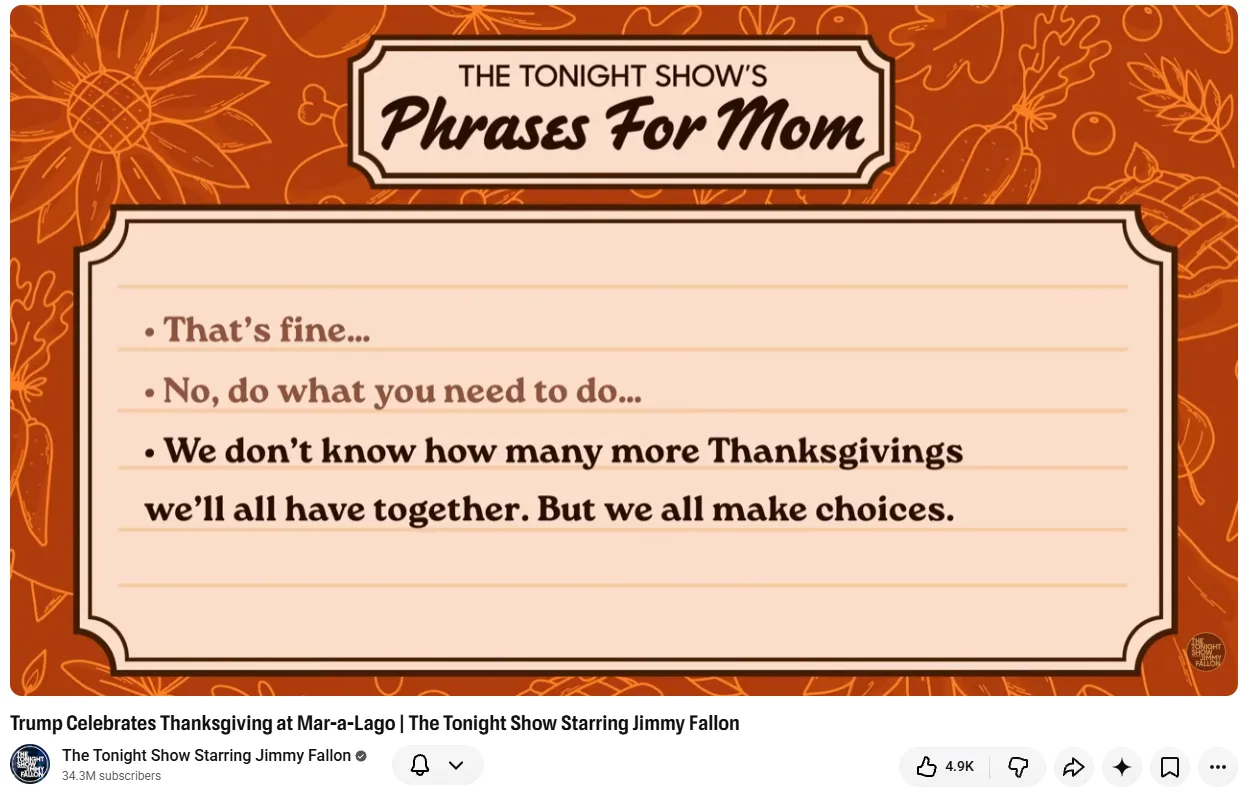
Level 1: Acting Chill (When She Is Definitely Not Chill)
The first two lines on the list look completely harmless on paper. All the real meaning is hiding in those three little dots at the end:
“That’s fine…” “No, do what you need to do…”
If you only look at the words, she sounds super understanding. She’s telling you to take care of your own stuff. No pressure at all.
But anyone who has listened to real spoken English can instantly hear the tone. There is a tiny sigh, and the last word stretches out just a bit too long. In English, people call this passive-aggressive. When a mom actually means “that’s fine,” she says it quick and light. When it comes out slow like “That’s fiiiine…”, the real message is usually: You might want to rethink that decision.
Level 2: Turning Up the Guilt
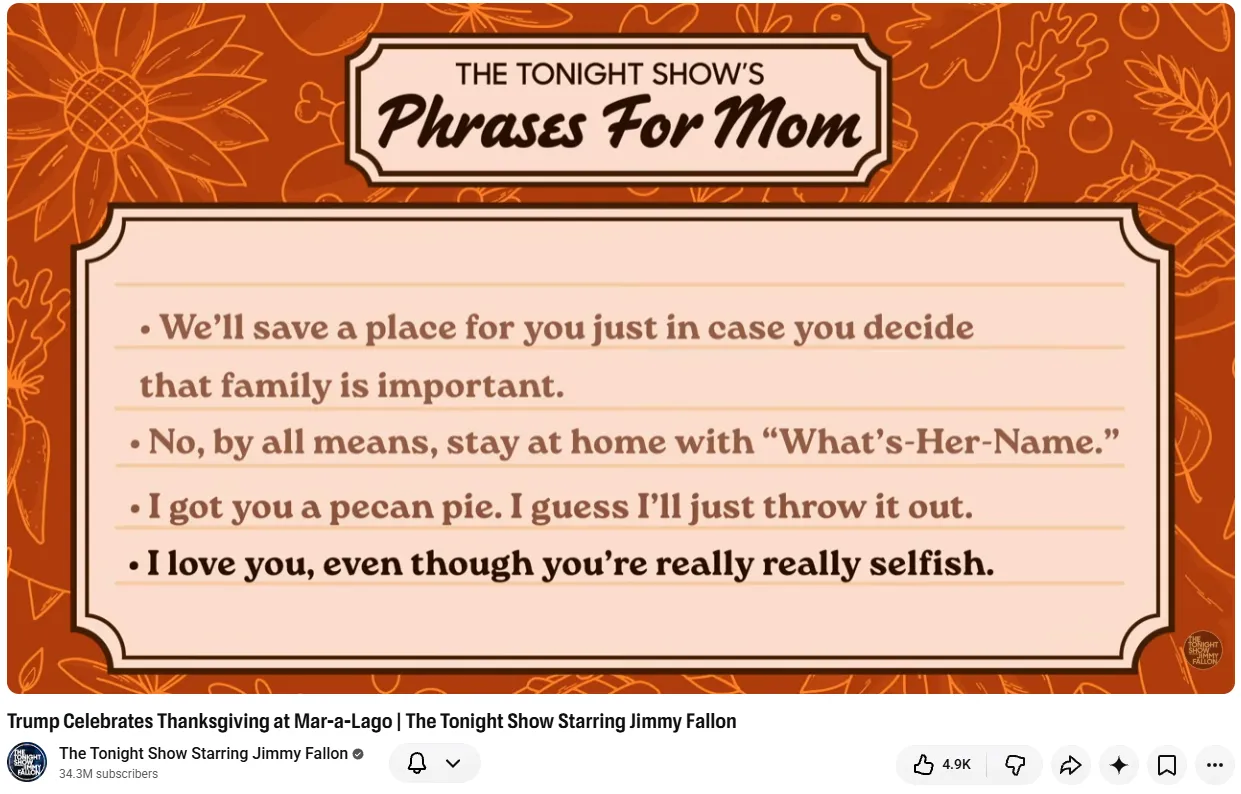
If the kid still doesn’t take the hint, it’s time for some classic guilt-tripping—making someone feel bad so they’ll do what you want. Honestly, if you swap out Thanksgiving for Chinese New Year, these next two lines could come straight out of my own family group chat:
“I got you a pecan pie. I guess I’ll just throw it out.”
Just replace “pecan pie” with “your favorite sweet and sour pork ribs,” and it hits the exact same way. She isn’t actually going to throw the food away. She just wants you to picture that sad, uneaten dish sitting in the kitchen while she sighs over it.
And then there’s this one, which might be my favorite line in the whole clip:
“No, by all means, stay at home with ‘What’s-Her-Name.’”
There are two really fun spoken English details here. First, by all means is normally a polite, warm way to say “of course” or “go right ahead.” When someone asks, “Can I open the window?” you can say, “Yes, by all means.” But in a sarcastic tone, it flips completely. Here, it basically means, Sure, go ahead—I’m not stopping you (but I’m definitely judging you).
Second, calling your son’s girlfriend “What’s-Her-Name” is a masterclass in shade. She knows the girlfriend’s name. Pretending to forget it is just a polite way of saying she’s not thrilled about losing you to her on a holiday.
Level 3: No More Hiding It
By the end of the list, the subtle hints are gone. Mom just puts all her cards on the table:
“We don’t know how many more Thanksgivings we’ll all have together. But we all make choices.”
“We’ll save a place for you just in case you decide that family is important.”
“I love you, even though you’re really really selfish.”
That first one—bringing up how many holidays are left—is the ultimate mom move. It works in every language and every culture. And the last one is just brutal in the funniest way. Starting with “I love you” and sliding right into “you’re really really selfish” leaves you with zero way to argue back.
The American Mom Holiday Translator
That’s fine… → It is not fine. I am already mad.
No, by all means… → Try me and see what happens.
I guess I’ll just throw it out. → Say you’re coming home, or feel bad forever.
We all make choices. → You picked them over us, and I will remember this.
When I watch American late-night shows to practice English, I usually expect to pick up new slang or get better at fast listening. Sometimes, though, the best part isn’t the vocabulary at all. It’s those moments where you don’t even need a dictionary to get the joke.
The food on the table might be different—turkey and pecan pie in the US, sweet and sour pork ribs and hotpot in China—but the way moms pull at your heartstrings feels universal. Next time you hear someone in a movie stretch out a slow “That’s fine…” or drop a sarcastic “by all means,” you’ll know right away that things are definitely not fine.